How AI is changing business and investments - KASE Academy and Silkroad Angels held a workshop
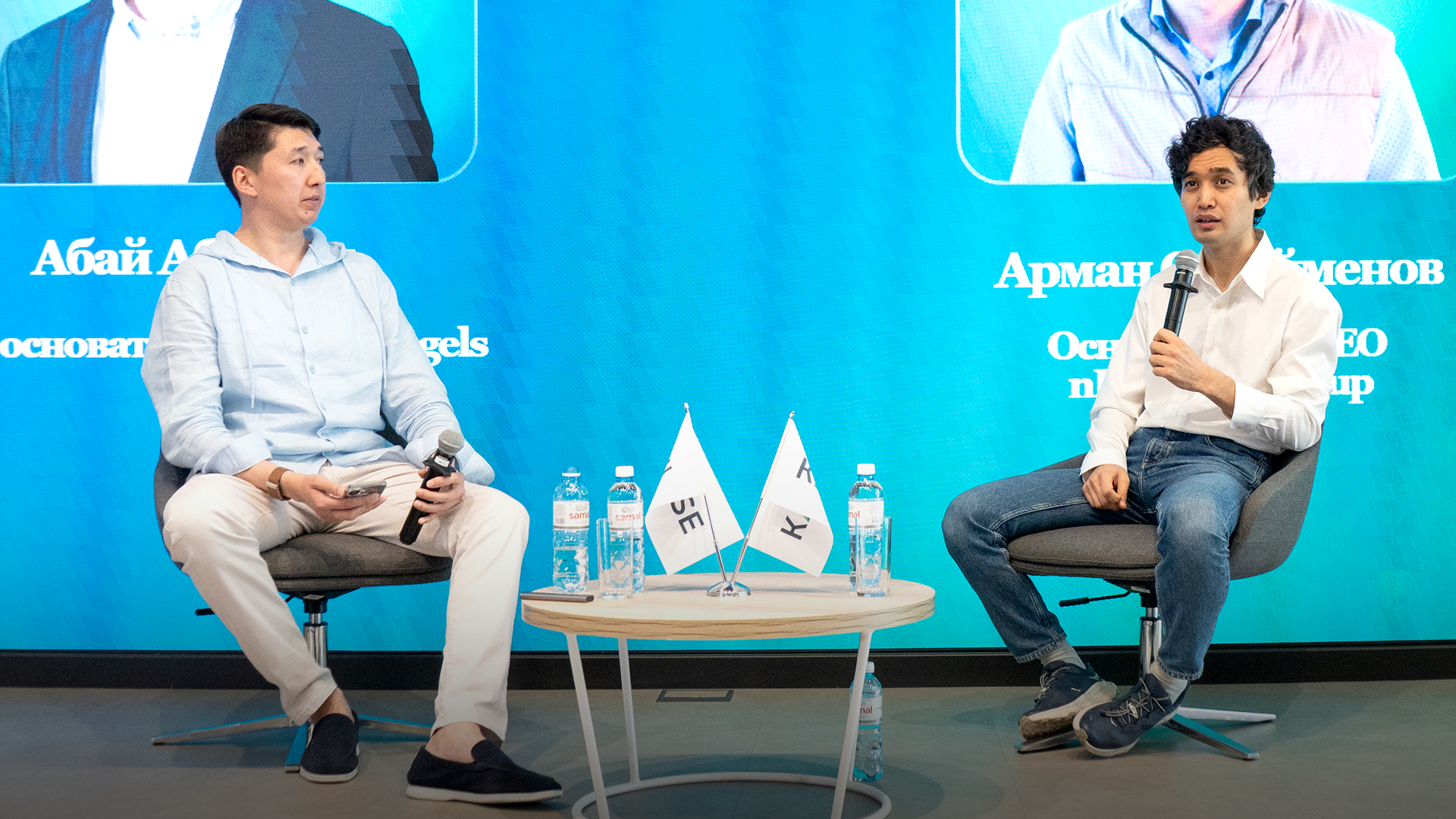
KASE Academy together with Silkroad Angels held a workshop on investing in artificial intelligence and the practical application of AI in business.
Participants discussed how artificial intelligence is changing approaches to company creation, product development and venture capital investing. Silkroad Angels co-founder Abay Absamet and Nfactorial Group founder and CEO Arman Suleimenov shared their experiences and perspectives on development of the industry.
The speakers noted that AI is becoming a key driver of value creation in the global economy, with investment in AI infrastructure and related technologies potentially reaching $700 bln in 2026.
"While just five years ago, creating a technology product required dozens of engineers, millions of dollars in investment, and 3-5 years of work, today teams of 5-10 people can build products much faster and cost-effectively. Artificial intelligence reduces startup development costs by more than tenfold. We are already seeing small teams creating global products with multi-billion-dollar valuations, and many experts believe that in the future, the companies of this scale could even be built by a single person", noted Abay Absamet.
Special attention was paid to transformation of the venture capital market under influence of AI. According to the presented data, approximately 68% of unicorn companies that emerged in 2025 are AI-native. The Higgsfield case was used as an example, demonstrating how small teams can create global-scale products thanks to capabilities of artificial intelligence.
Arman Suleimenov shared practical use cases for AI tools and discussed how artificial intelligence is already helping companies improve process efficiency, accelerate product development and open up new business opportunities.
"Today, artificial intelligence is already covering most routine functions - from recruiting and application processing to data analysis, sales and content marketing. Many processes can now be automated or dramatically accelerated. As a result, the structure of work within companies is changing, the value is shifting from task execution to task setting, quality control and decision making. In this sense, traditional middle management is becoming the area of greatest transformation". noted Arman Suleimenov.
Other events